
Why Do Journalists Pick On Scientists?
Provocation as a Tool to Discover Human Connection Behind the Story

Have you ever wondered what this pesty journalist wants to hear? drives a journalist during an interview? It goes beyond just gathering facts; it’s about establishing a connection with the person behind the science. Journalists are on a mission to reveal the human side of their narratives, and sometimes, that means asking unconventional questions to draw out the interviewee’s personality. Most of our readers do not remember bare data, and they remember stories.
In my interviews, I want to understand how my respondents think and react. One of my (and many other journalists’) favorite techniques is provocation. I prepare a deliberately provocative question designed to break down initial barriers. Thus, I invite deeper emotions and insightful reflections that enrich the conversation, showing my readers why researchers care about the topic and how deep scientists’ reflections on the theme are. This blend of inquiry and empathy makes journalism a powerful tool for sharing knowledge and sparking dialogue.
I still remember some remarkable answers I’ve received over the past dozen years. Take, for instance, my chat in 2014 with Vsevolod Belkovich, a leading Soviet researcher on cetaceans. I asked him, “Do dolphins have a sense of humor?” He looked me straight in the eye and said,
“To my bedrock belief, all living creatures on our planet have a sense of humor. Even humans.”
If you're a scientist preparing for an interview or writing for a broader audience, consider your approach and potential questions that promote creative thinking.
You can also reflect on the broader implications of your research for society, the environment, and future studies and be open to provocative questions as opportunities for deeper dialogue.
People are mostly not interested in the bare data obtained but in the passion behind your work, so sharing personal anecdotes will help them understand the importance of your findings.
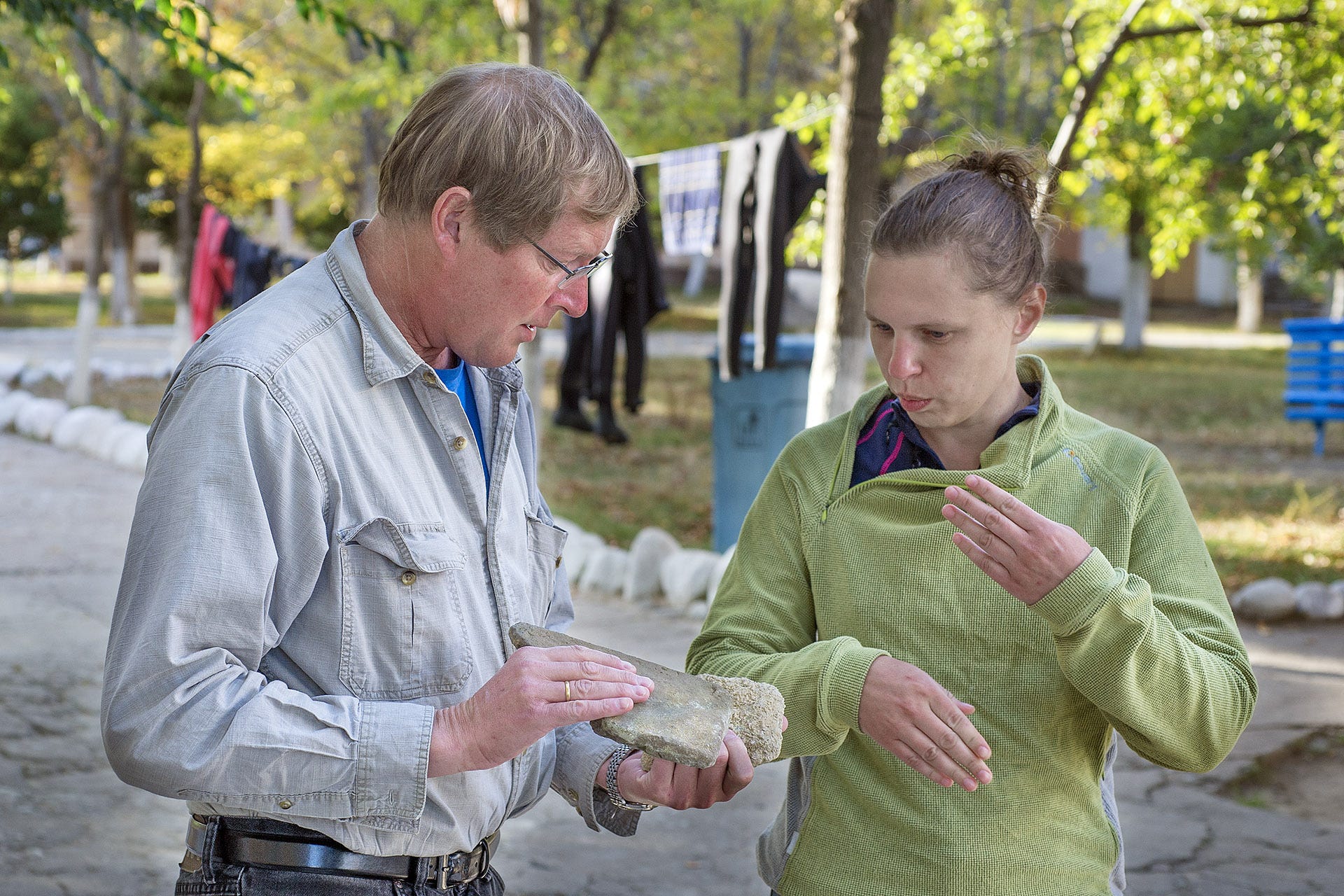
In the photo by Viktor Lyagushkin, I chat with Dr. Fred Hiebert, National Geographic Archaeologist-in-Residence, who shows me master’s stamp marks on the ancient bricks from the sunken Tamerlan’s Palace on the shores of the Issyk-Kul Lake, 2012
.
Excellent and on point! For better or for worse, people won't remember the exact numbers and the reasoning behind science. However, reminding them that there are people behind those numbers is crucial for a better and broader understanding [= Thanks for sharing